Posts

A journey down the Tigris

Image
Fifty years ago, wooden rafts called keleks regularly plied the Tigris River, carrying people, livestock, and cargo – with loads up to 35 tons – from southern Turkey to northern Iraq. Built from logs lashed together and made buoyant by inflated goat skins, a fully loaded kelek could travel the 250-mile distance from Diyarbakır, Turkey, to Mosul, Iraq, in just six days. Today, the rafts' long, heavy wooden oars push slowly through the brown, flat waters of the Tigris as they traverse northern Iraq. Sometimes their bottoms scrape the riverbed, the water levels low enough on a late September day for a tall man to stand waist-deep in the middle of the river. It takes a full day of hard effort to row eight miles. Nice spot for note-taking. Photo by Anna Bachmann . When a last-minute invitation arrived last month to join the environmental group Nature Iraq as they paddled, floated, rowed, and (sometimes) towed a trio of traditional boats down the Tigris River from Hasank...

Art and the city

Image
Every other autumn is eagerly awaited by art-lovers in Istanbul, as it brings (in the odd-numbered years) the return of the Istanbul Biennial . Now in its 13th edition, the biennial itself varies in the quality of its offerings, but reliably brings with it a host of other art exhibitions and events throughout the city -- as well as the opportunity to peek into some typically shuttered buildings, from historic Greek schools to crumbling hamams. This year's biennial curator chose to focus on the public domain , a decision that both dovetailed with and was made problematic by the Gezi Park protests that broke out this summer, increasing both the anticipation and controversy around the international art event. As editor at Time Out Istanbul , I spearheaded this year's coverage of the Istanbul Biennial, putting together a cover package that previewed the event, looked at parallel exhibitions being organized around town, and delved into some of the local artist residency pro...

A little time at the helm of Time Out

Image
I've just wrapped up a seven-month stint editing Time Out Istanbul , the local edition of the popular international line of arts and entertainment magazines. I spent nine years in the United States as an editor at Sierra , the magazine of the Sierra Club, and this brief return to my roots reminded me of how much I enjoy working with writers and conceptualizing packages -- or entire issue's worth -- of stories that will work together to provide a rich experience for the reader. As the head of a very small team, I also did my fair share of writing at Time Out Istanbul . In addition to our Gezi Park protest coverage in the July issue, and our Istanbul Biennial preview in the forthcoming September issue, these are some of the stories I most enjoyed researching and writing: “ Hidden History ” A stroll through Istanbul’s Byzantine past with Context Travel “ Resisting Nostalgia ” An interview with Turkish artist Ali Kazma on his fascination with transformation “ Literatu...

Amid strife, Turks break fast together for Ramadan

Image
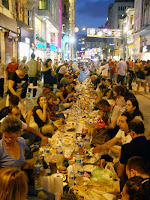
On the first night of Ramadan last month, thousands of people gathered on İstiklal Caddesi in central Istanbul. They laid down newspapers and tablecloths in a long line stretching nearly half a kilometer — then sat down on the ground to break their fast in the middle of the city’s busiest pedestrian boulevard. Passing food and drinks from hand to hand, participants called out to people walking by, “Is anyone hungry? Is anyone thirsty?” and leaped up to distribute water, dates, baklava and other traditional fast-breaking items. As the meal wrapped up, young men toting large garbage bags chanted, “Trash! Trash! Trash!” as they worked their way through the crowd collecting refuse. Ramadan, the month when observant Muslims traditionally fast from dawn till dusk, ended this year on August 7, but not before coming against a backdrop of weeks of street protests in Istanbul and elsewhere in Turkey. The very iftar meal that breaks the day’s fast became a forum for Turkish people to e...

Grim future for historical gardens?

Image
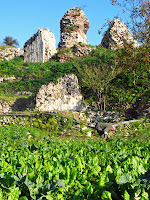
Walking the 6.5-kilometer length of the city's ancient land walls my first year in Istanbul, I was delighted to discover lush green vegetable gardens (photo, right) growing in the shadow of these 1,600-year-old fortifications. Later, I learned from a historian specializing in Ottoman gardens that these small market plots -- known in Turkish as bostan -- were established on very fertile soil and had been handed down from generation to generation for hundreds of years. As with so many other things at that time, it seemed perfectly reasonable to assume that tradition would continue on for many more generations to come. But this summer, with the dust from the Gezi Park turmoil not yet settled down, I received an urgent message alerting local press that bulldozers had moved in to raze some of these gardens near the Yedikule fortress. With tensions high in the city, a fellow foreign journalist and I who arrived on the scene to report on the story became embroiled in a heated c...

Orchids and ice cream

Image
Clad in a red vest with gold embroidery and matching fez, the ice cream vendor rings a bell hanging above his booth on Istanbul’s busiest pedestrian thoroughfare, then grabs a long stick and plunges it into a vat in front of him, churning its contents with great effort. Triumphantly, he raises what looks like a football-sized mass of taffy into the air, spins it around, and then drops the ice cream back into its container as the first customer of the day steps up. What gives Turkish ice cream ( maraş dondurması in Turkish, after the Kahramanmaraş region in the southeast of the country where it is believed to have originated) the unique firm, chewy consistency that allows it to be slung around or cut with a knife has traditionally been salep — a powder made from tuberous orchids.... Read the rest of this article, " Orchids Under Threat, From Turkish Ice Cream ," on Zester Daily.

Gezi on my mind

Image
During the last week of May, I found myself walking through Gezi Park at some point most evenings, drawn to the scruffy, neglected green space near Istanbul's Taksim Square to see how the crowds had multiplied since a few dozen protesters trying to block the bulldozing of trees there as part of a controversial construction plan were teargassed by police. Each night, there were more and more people in the once largely disused and ignored park, talking, singing, painting signs, picnicking, and pitching tents. And each morning, those who remained at dawn were teargassed once again. After waking up to this news one too many times, I sent off a story pitch about the protests to The Atlantic 's CityLab (formerly The Atlantic Cities), which commissioned an article for the next day. As I reported and wrote, the story changed rapidly; by the time my article about the Gezi Park protests was published, much of Istanbul (and then other cities around Turkey) had erupted into mass d...